

As the world 3D-prints stations and builds electric roads, South Asia must choose innovation that works — not just innovation that wows.
Lately, my feed looks less like LinkedIn and more like a sci-fi trailer.
📡 China launched the world’s fastest 10G internet — 9,834 Mbps download speed, 3ms latency.
🏗️ BYD’s new megafactory — allegedly bigger than San Francisco. (Take that with a forklift of salt.)
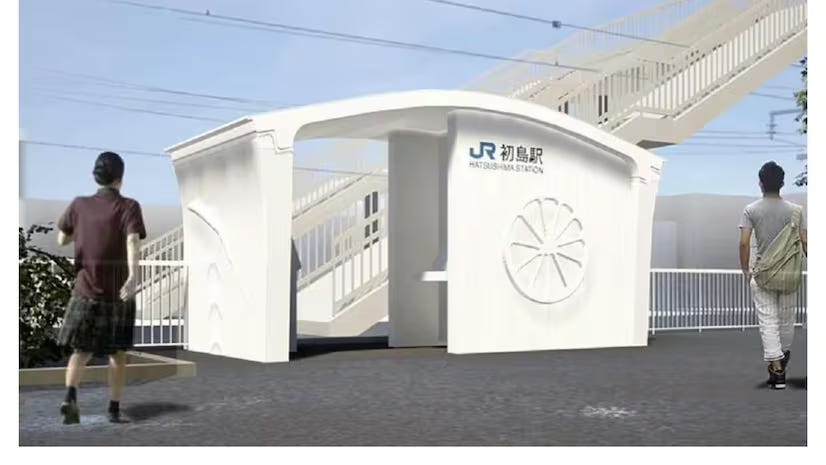
🚉 Japan 3D-printed an entire train station.
🤖 South Korean universities built a real-life shapeshifting liquid-metal robot, a T-1000 in the making — for medicine and disaster response.
🐕🦺 Swedish startup Intuicell gave a robot dog a digital nervous system — allowing it to learn new skills in minutes, without pre-programming.
Nope, this isn’t anime.
It’s a regular Tuesday in 2025.
But this wave of innovation isn’t just about gadgets and jaw-drops.
It’s about soft power — who gets to shape the future, and how.
When a country builds faster trains, smarter bots, and entire cities at breakneck speed, they aren’t just flexing tech prowess.
They’re broadcasting ambition.
These advances aren’t isolated headlines.
They’re signals.
Signals of what’s possible when research and development isn’t an afterthought — it’s a cultural muscle.

💡 And yet, for every jaw-dropping breakthrough, I find myself asking not just “what’s possible?”, but “at what cost?”
→ What does this mean for energy use, surveillance, waste, and extraction?
→ What does this mean for South Asia’s innovation story?
→ What does this mean for the startups we back, the systems we build, the futures we design?
Because here’s the thing:
The future isn’t just high-speed.
It’s high-stakes.
It’s unevenly distributed — but it’s not asleep.
It’s shapeshifting. Streaming. 3D-printing itself into existence.
Are we paying attention?

Meanwhile, scrolling through more headlines:
🌍 Sweden just launched an electric road — one that can charge EVs while they drive.
🚂 India is gearing up to test a hydrogen-powered train — railways powered sustainably on non-electrified routes.
Both are exciting breakthroughs.
Both could change the way we move, consume, and live.
But for a country like India, there’s no one-size-fits-all fix.
We need context-based solutions, built for the messy, magical, sprawling geographies we call home.
- EVs for urban centers.
- Hydrogen for long-haul rail and freight, perhaps.
- Biofuels for rural and legacy systems, maybe.
- Electric roads — but only where terrain, weather, and infrastructure make sense.
Because imagine installing electric roads in hill stations battered by landslides, rain, or snow?
It’s not just about tech working — it’s about tech working sustainably.
India can’t afford solutions that look great on paper but collapse in practice.
We need innovation that is cost-aware, infrastructure-ready, and equity-driven — not just efficiency-chasing.
The future isn’t about picking the flashiest tech.
It’s about picking what works — for all of us.
Asia’s tech innovation is sprinting ahead. But for India and South Asia, the future must be context-first, not headline-first.
Tech that dazzles without delivering is just theatre.
And bad theatre, at that.
Credits:
This is article is written by Deepa Sai
[…] From Bullet Trains to Particle Bots: Asia’s Future Isn’t Waiting for Anyone […]